



Blog

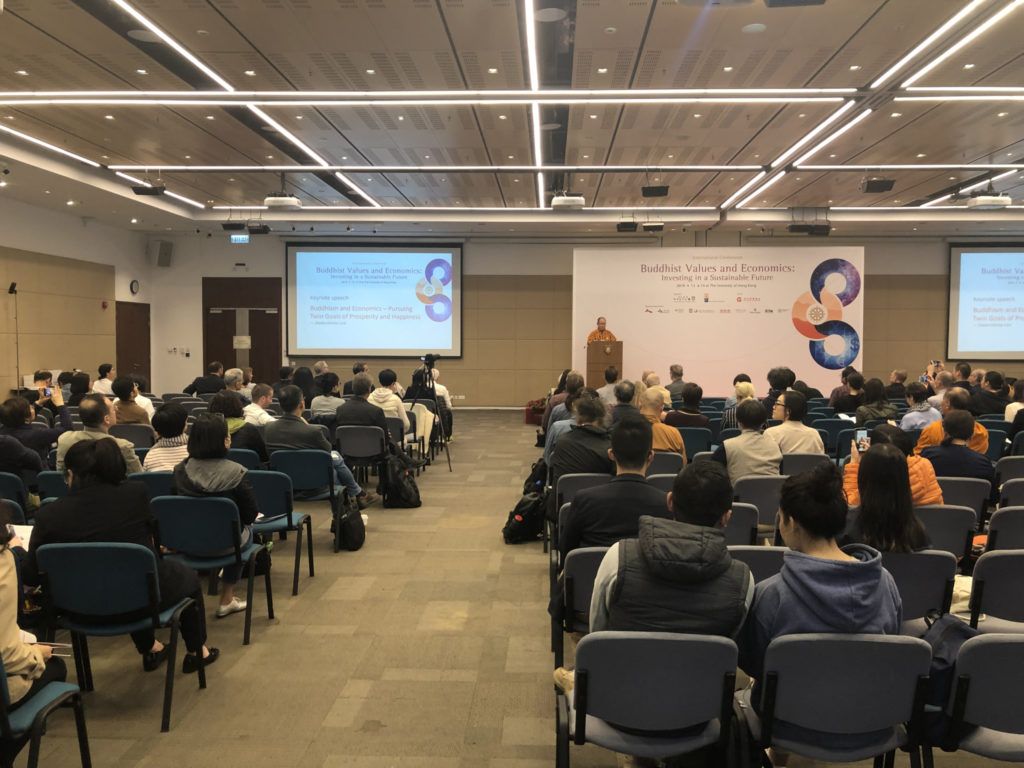
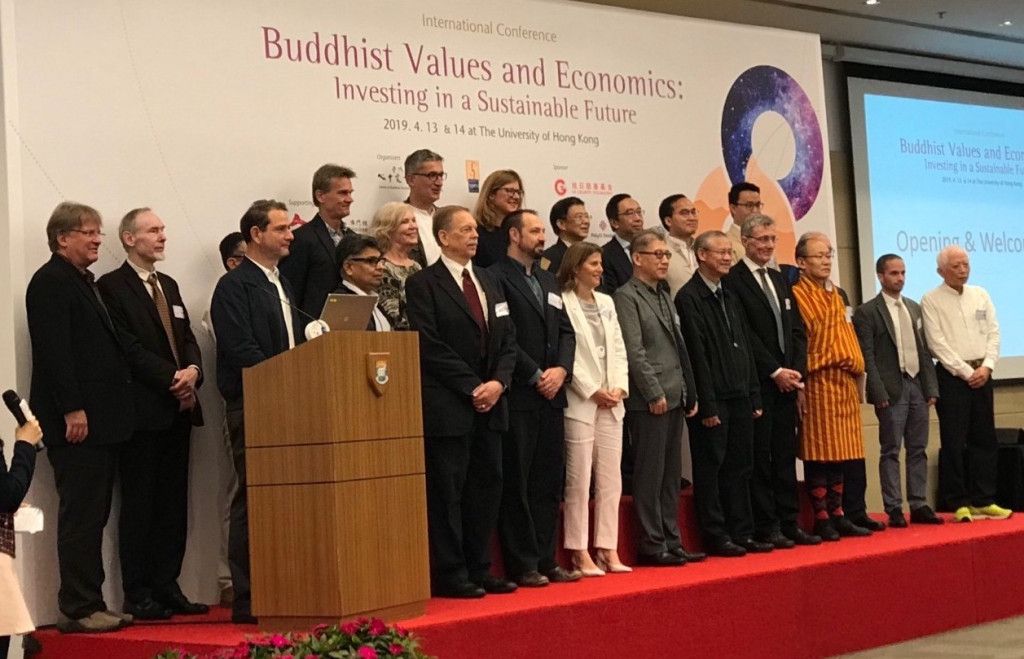
In this post am offering my personal take aways from a Conference on Buddhist Values and Ethics in Economy we attended and spoke at in Hong Kong in April 2019. The conference was organized by the Centre of Buddhist Studiesof HKU and the European SPES Institute. This two-day conference was an impressive convention of academics, spiritual leaders, researchers, politicians, entrepreneurs, wealthy donors, impact investors, financial- market experts and consultants sharing their current state of insights, ideas and thoughts. All videos are available here.

One personal note at the beginning: I don’t believe Buddhist values and economics hurt the economy and business. On the contrary, but this very place where it should be expressed: in our daily personal lives in businesses and companies and in national economics and political action. Buddhism is powerful only, when applied to the very heart of our everyday lives, business and society.

1. What is Buddhist Economics?

While Buddhist Economics as a field of research may still be new to many, it has grown over the last few decades. The term Buddhist Economics is believed to have been coined by E. F. Schumacher in his pioneering 1970s work, Small is Beautiful. Inspired by Buddhist philosophy, Schumacher believed that the economy should serve society ”as if people mattered.”

Schumacher foresaw the problems that come with excessive reliance on the growth of income, especially overwork and dwindling resources. He argued for a system that valued individual character development and human liberation over attachment to material goods. In Schumacher’s view, the goal of Buddhist Economics is “the maximum of well-being with the minimum of consumption” (Buddhist Economics, Clair Brown, p. xiii).

Buddhist Economics is the integration of key Buddhist values and ethics (such as non-violence, compassion, love and wisdom) with Economics – on a global, regional and individual level. 

”Compassion and mindfulness can make our businesses a pleasure for ourselves and a gift for our employees and for the world.” Thich Nhat Hanh, the world-famous Zen teacher and founder of Mindfulness

2. What is the main goal of Buddhist Economics?

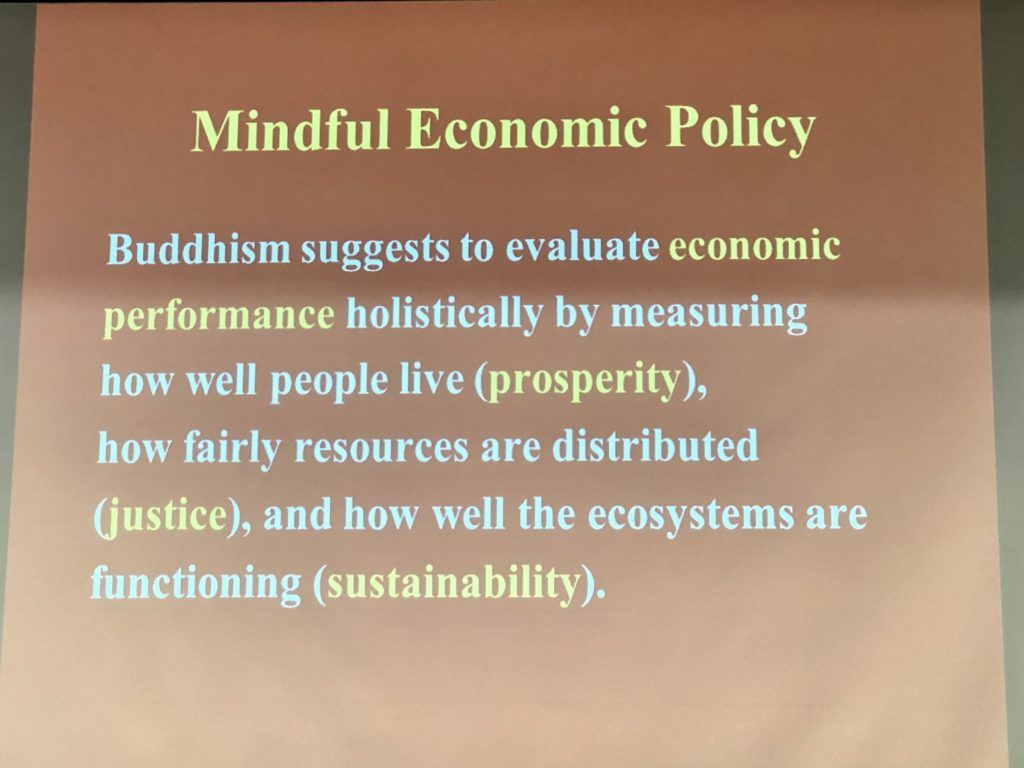
Buddhist Economics aims to establish shared, sustainable prosperity on a global level. 

”In Buddhist Economics, taking care of our human spirit is part of our lifestyle.” –
Clair Brown, Professor of Economics, University of California Berkeley

3. What are key challenges Buddhist Economics addresses?

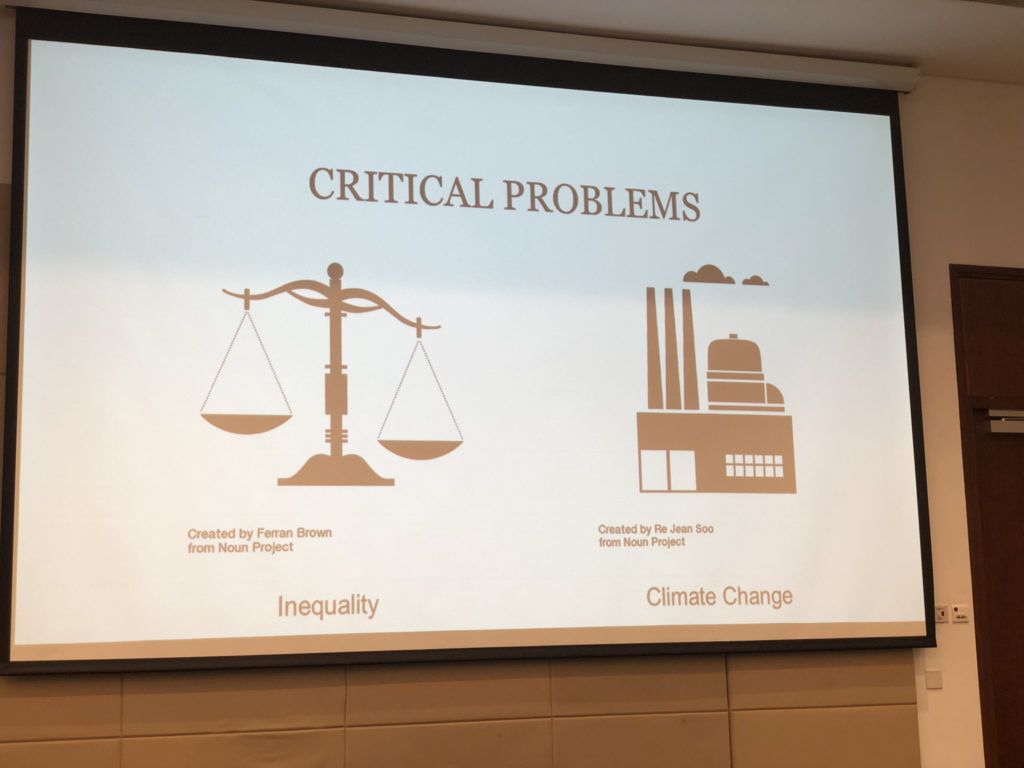
  1. Global warming: the threat of environmental collapse 
  2. Income inequality: vast economic disparities with opulent living for a few, comfortable living for many, and deprivation with suffering for most


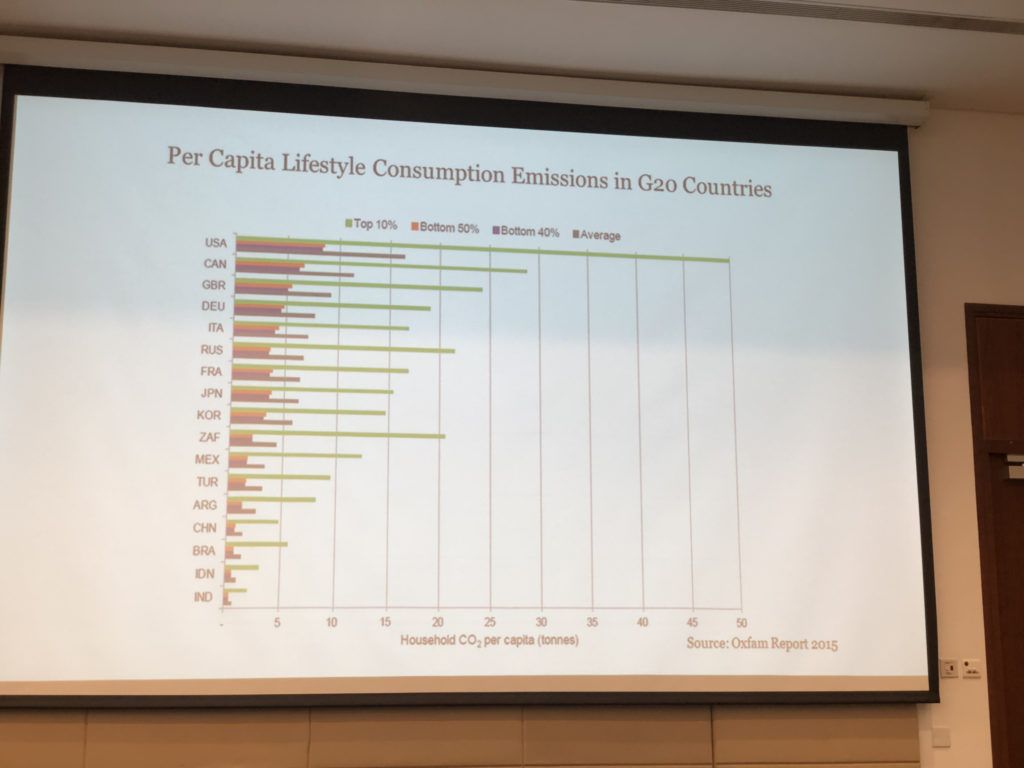
Both of these challenges are interrelated and profoundly influenced by economics. Inequality and CO2 emissions go together: Rich countries and people are big polluters, while inequality is a source of suffering. In 2014, less than 1% of people owned 48% of global wealth while the bottom 80% shared only 5.5% of global wealth. (source:Buddhist Economics, Clair Brown) In addition, people feel worse off as inequality grows. The problem of inequality is nailed down with this quote from Zsolnai, Lud, and Opdebeeck:

“The world is not divided between the ‘haves’ and the ‘have-nots’ but between a majority that do not have enough and a minority that has too much.”

It is a fact that countries choose their level of inequality and their carbon footprint. It is not just a matter of taking away from the rich and giving to the poor but rather of defeating the root cause and the legislation which leads to inequality in the first place. While neoliberals promote “free” markets (meaning little governmental interference and few regulations), there is no such thing as a “free” market, since the more you have, the more power you have. We all know the dynamics of monopoly; the rich get richer and the poor people get poorer. This is ultimately where free markets lead, unless there is a higher power, called politics.

The guiding questions are manifold: 


4. What are the key ethics and values of Buddhism?

Buddhism is a spiritual wisdom tradition and not a religion, as there is no God involved. The underlying key question and goal of Buddhism is just one question:


Spiritual and contemplative practices such as meditation are meant to help clear the mind and cut through illusions (including the idea of a separate self) in order to take wise action in the midst of life. The purpose of monks and monasteries and teachings is to cultivate this wisdom, not to keep it away from people.

The key assumption is that most of our suffering is self-inflicted and thus can be relieved by ourself. It is an approach of self-empowerment rather than the belief in a higher power we depend on for better or worse. Here are some of the related teachings and principles I find most relevant: 


5. What is the difference between Western Economics and Buddhist Economics?

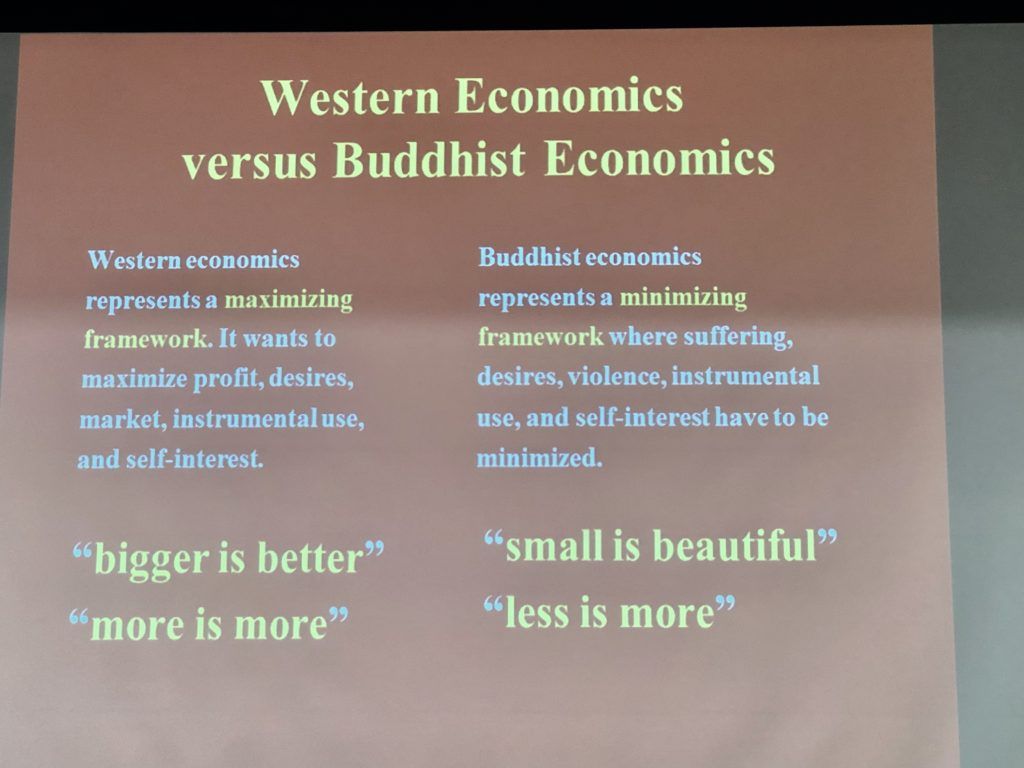
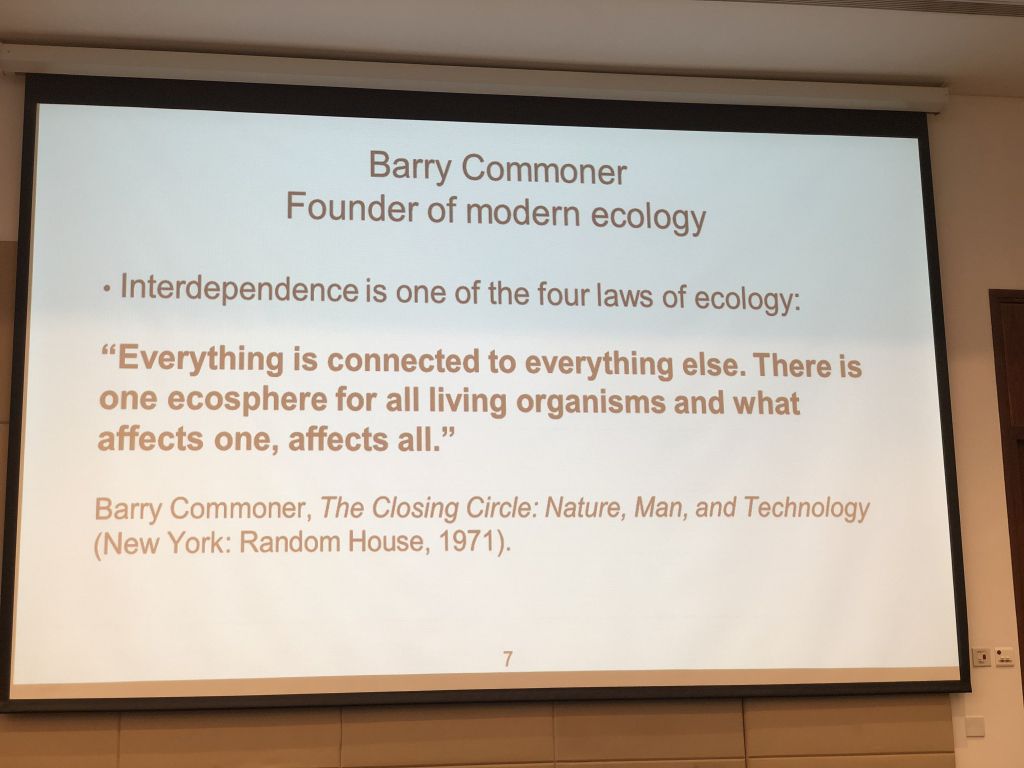
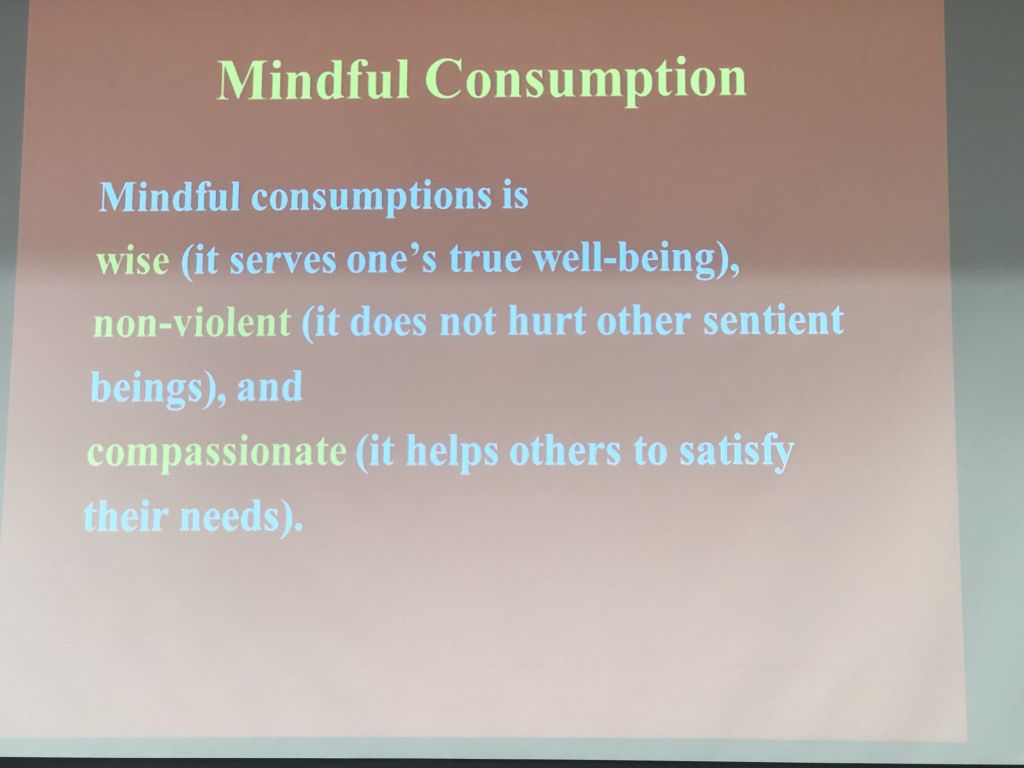
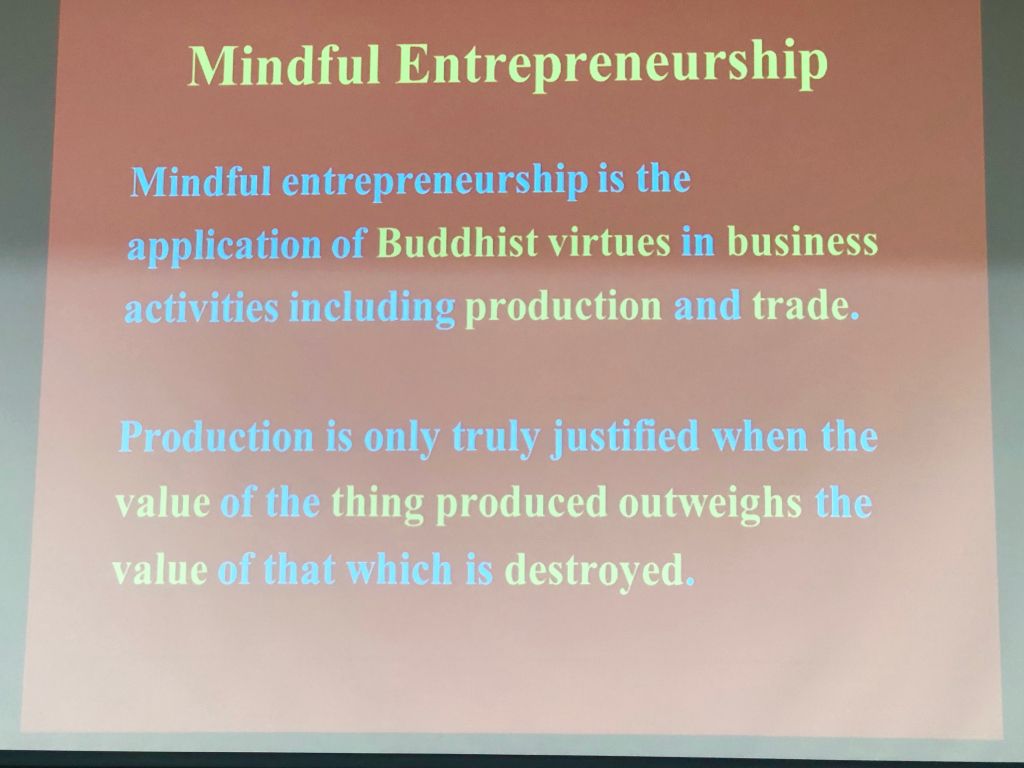
This slide was shown during the Buddhist Economics conference in April, and it summarizes the key differences nicely:

Key Assumptions of Western Economics

  1. Maximizing framework focused on maximizing profits, desires, markets, instrumental use and self-interest.
  2. Economy of dissatisfaction: Desires are not meant to be satisfied but rather to be created, inflated and cultivated. Use of the endlessness of human wants. Value of things = monetary price. The value of everything, even damage to nature or life itself, is expressed in a “price” or money.Because Gross Domestic Product uses only income to measure economic growth, income has become a country’s primary focus.
  3. Dystopian conception of humanity (Menschenbild):  People’s strongest motivation is economic greed to increase material wealth in a manner reflecting survival of the fittest, natural selection and competition.
  4. Paradigm of technical and scientific progress dominates and suppresses metaphysical, human and spiritual dimensions
  5. Neoliberalism/capitalism: Inequality is required in order to provide incentives for people to work hard and be rewarded for their contributions to the economy. Social security and other social nets will spoil people. Hardship is an intended tool of incentive. Money rules the world.
  6. Means justify the end. Even if they are ruthless and violent (war).Paradigm of separation: Since we are all different and separate, suffering of people far away is none of my concern. Self-optimization at the cost of others is acceptable, if not necessary.Competition: Competitive markets ensure the best possible outcome, even if some people are still starving. Aid interferes with global markets and might support corruption. Thus, intolerable injustice is tolerated.Materialistic possessions lead to well-being, safety, happiness and status.Exploitation: The environment and foreign countries are regarded as resources for rich countries to dominate and exploit.Economy is a zero-sum game: Your gain is my loss, so it is a “you OR me world” instead of a “you AND me world.” Creation of win-lose situations.Profits are individualized, costs are distributed to the society (environmental damage, bail-outs…).

Key Assumptions of Buddhist Economics

  1. Minimizing framework focused on minimizing suffering, desires, violence, instrumental use and self-interest.
  2. Less is more: As motivation is intrinsic rather than materialistic, low material consumption and a simple lifestyle open the mind for spiritual goods. The essence of civilization is not in the multiplication of wants but in the purification of human character.
  3. Sufficiency: Economy of enough (how much is enough?)
  4. Happiness from giving, not having: Eudaimonic (intrinsic) happiness comes from helping others, having good relationships, contributing to the community and caring for the planet. In contrast, since hedonic happiness stems from consuming and buying, it does not last long (assuming that basic needs are met). Buddhist Economy does not promote poverty!
  5. Wealth is inexhaustible and can be measured in inner dimensions such as love, compassion and wisdom. It can be increased by cultivation and spiritual practices. No outer wealth is needed for this (just enough). Outer wealth is also fine as long as we do not become attached to possessions, and we share our riches with others.
  6. A digression is to consider why happiness does not increase with (national) income. The reason is known as the Easterlin Paradox:Once basic needs are met, average national happiness tends to remain the same, while average per capita national income grows. This is due to people’s adaptability to situations or events,both positive and negative. In addition, people strongly link avoiding a loss to acquiring a gain; economists call this “loss aversion.” Even if we enjoy a good event or outcome, we soon adapt to it and return to our baseline sense of well-being.


6. What is the scientific foundation of Buddhist Economics?

The 2019 “Buddhist Economics” Conference in Hong Kong gathered contemporary researchers and academics in this field. They included Clair Brown, who taught Buddhist Economics at UC Berkeley and is the author of Buddhist Economics: An Enlightened Approach to the Dismal Science,and Prof. Richard Payne, editor of the essay collection How Much is Enough?: Buddhism, Consumerism, and the Human Environment. Also attending were representatives from Bhutan to present about Gross National Happiness (GNH); in addition, the venerable Dr. Jing Yin (淨因法師), abbot of the Po Lin Monastery in Hong Kong and former Director of the Centre of Buddhist Studies, gave a presentation about the Buddhist Perspective on Wealth. Prof. Laszlo Zsolnai, a Hungarian economist influenced by E. F. Schumacher and who has published books on Buddhist Economics since 2006, was invited but could not attend due to health issues.

7. Why would anyone address hard problems, such as the economy and environmental collapse, with a spiritual philosophy?

During the last 100 years, we have seen a shift from a spirituality-oriented culture of frugality into a materialistic culture supported by modern media.

“I used to think that top environmental problems were biodiversity loss, ecosystem collapse and climate change. I thought that thirty years of good science could address these problems. I was wrong.

The top environmental problems are selfishness, greed and apathy; to deal with these we need a cultural and spiritual transformation. And we scientists don’t know how to do that.” – James Gustave Speth, American environmental lawyer and advocate, 2013

We cannot solve our problems with the same mindset that created them, and Buddhist Economics invites us to reflect on and transform the basic beliefs and assumptions upon which our current economic system is based. As Speth points out, the environmental crisis is the result of our state of mind and culture.

Harmful behavior and undesirable outcomes can be seen as the manifested result of inner states of anxiety, aggression, discontentment, greed, hate, fear and desperation. 

Addressing environmental destruction and economic dysfunction requires addressing the spiritual and psychological dimensions and the – mostly unmet – human need for connection, safety and personal development. Emotional factors such as fear and desire are more powerful than reason, driving us to our worst economic excesses of greed, overconsumption and materialism while damaging our societies and ravaging our environment. The science of economics adopts a rational approach, but the issues of fear and the emotional need for security are far more basic.

“The theoretical models remain rational solutions to largely irrational problems.” – Venerable Prayudh Payutto, Buddhist monk

Beware of Spiritual Materialism

We can deceive ourselves into thinking we are developing spiritually when instead we are strengthening our egocentricity through spiritual techniques. This fundamental distortion may be referred to as spiritual materialism.

“There are numerous sidetracks which lead to a distorted, ego-centered version of spirituality.” – Chögyam Trungpa, Tibetan Buddhist, founder of Naropa University

We can create a spiritual ego, by saying, “I am more spiritual than you are! I am more conscious and self-aware than you.”Judgment, comparison and depreciation get in the way and play out counter-productively.

“Our collective compassion, mindfulness and concentration nourishes us, but it also can help to reestablish the Earth’s equilibrium and restore balance. Together, we can bring about real transformation for ourselves and for the world.” -Thich Nhat Hanh

8. Are there real life examples?

The Chaipattana Foundationsays that sufficiency economy is “…a method of development based on moderation, prudence, and social immunity, one that uses knowledge and virtue as guidelines in living.” Source: Wikipedia 

9. Who can take action and how? 

What companies (can) do: 


Instead of turning our bad conscience, guilt and shame for causing harm into aggression and hatred, we could consider ourselves as beings that could actually be beneficial for others and the environment. Dreamers are not the people who imagine a different future, but the people who make us believe we can continue the current path forever. 

Related Links

TED Talk: the dirty secret of capitalism– and a new way forward

https://www.buddhistdoor.net/news/the-university-of-hong-kong-hosts-international-buddhist-values-and-economics-conference?fbclid=IwAR1kOGkA3XxAL_tzB97PoCeX5O-Cnw-cEQsWBksiLUCpWmtFvZdGQa12tZg

The Buddhist Economics of Buddhist Economics by Ernest NG

Rethinking Buddhist Economics after the Conference

5 Hausmittel ersetzen eine Drogerie

Buddhist Economics Conference: Videos here

European SPES Institute: Spirituality in Economics and Society

Measuring Global Happiness

Schumacher, Ernst F. 1984. Small is Beautiful: Economics as if People Mattered. London: Sphere Books Ltd. Original edition, 1973.

Brown, Clair. 2017. Buddhist Economics. New York: Bloomsbury Press.

Emerson, Jed. 2018. The Purpose of Capital. San Francisco: Blended Value Group Press.

Opdebeeck, Hendrik. The Economy and Meaningfulness. A Utopia?Brussels: Peter Lang.

Zsolnai, Laszlo and Bernadette Flanagan (ed.). 2019. The Routledge International Handbook of Spirituality and Society. London: Routledge.

more Blog Posts

Follow us


Linkedin


Youtube


Spotify


Itunes